Mostrando entradas con la etiqueta folk Hungaro. Mostrar todas las entradas

sábado, 20 de octubre de 2012

Kerekes Band - Pimasz


Un animado, ecléctico, funky y jazz-dance amistoso interpretación de melodías tradicionales de sus raíces húngaras. Una interpretación que es igualmente accesible a un rock, jazz, músicas del mundo las raíces o ventilador, de cualquier edad. Expuestos a los diferentes estilos de música contemporánea a partir de ahora audible en todo el mundo Kerekes se encargaron de anunciar al mundo que la música de Hungría también pueden ser cobardes. Inspirado en canciones populares de un pasado lejano, dictadas a través de generaciones, Kerekes absorbe nuevo CD de jazz, las raíces, funk y drum & bass, incluso en su viaje, su inquietante contrapunto a sus melodías de rock n roll actitud.

1. Csángó Boogie
2. Medina
3. Cheeky
4. Searching
5. Black Magic
6. Amodou
7. Two Shepards
8. Flame of the Fire
9. Stict
10.Unmitigated Rascal

DESCARGA

PASS:musicmund


jueves, 6 de septiembre de 2012

Makám és Lovász Irén - 9 Colinda


"MAKÁM Group is the most characteristic Hungarian representative of the New Tradition. Its landmarks are eleven albums. Its music spans tradition and modernity, the East and the West, the duality of the collective and the individual and search for the ancient harmony.
The group which was founded by Zoltán Krulik, broke into musical life here as the Eastern Central European follower of the ethno-avantgarde trend, this period was nuanced by Asian, Far Eastern roots as well as Balkan, African effects or repetitive elements of contemporary music.

The latest period of MAKÁM Group (SkanZen, 2000; 9 Colinda, 2001; Sindbad, 2001 - Fonó Records; Anzix, 2003 - FolkEuropa) is characterised by the rediscovery of the archaic forms of Hungarian folk music and that of the song first of all.
The legacy of Bartók and Kodály, the synthesis of elements of archaic cultures and contemporary age is the unchanged musical credo of the MAKÁM Group.
The Makám ensemble was formed in 1984 with the purpose of establishing a peculiar form of community played music, and trying to show the common characteristics existing in music cultures of different peoples and contrasting musical forms. This is a sort of improvisative chamber music containing the elements of classical music as well a contemporary jazz and rock. Its melody and rhythm are influenced by East-European ethno and Oriental music. Beleiving that the ancient Hungarian folk music is deeply related to Eastern traditions, the group arrivedat cultures geographically far away from Hungary.
The name of the group, Makám, is a word of Persian-Arabic origin, referring to the structural signif icance in improvisational music. Particular chords in the band's style are due to the rarely heard rhythms and melodies on one hand, and, on the other to the original collective sound of instruments never experienced in the same way before. Besides the classical instrments such as saxophnes, clarinet, oboe, guitar, double-bass, the tunable tabla and two ancient instruments, the Balkanien kaval (wind instrument) and the Indian ghatam play an important role in the group's sounding.

Furthermore, several exotic stringed instruments plucked with a plectrum, and percussion instruments, such as marimba, kalimba, bamboo sansas, ektar, talking drum and bells, colour the harmony of the music. Most of these instruments are made by the group's idly on the original function of the instruments but tries to explore new possibilities in playing techniques, tonality and soring. They have made many discs and radio recordings of classical music and etno contemporary music in Hungary and abroad, and have given concerts in festivals, concert halls and jazz clubs throughout Western Europe with great success. The Makám is a most exciting creative group of the latest years. It has attracted attention to an impovisational, accord combining elements of contemporery music as well as jazz and rock with the roots of Eastern European, Asiatic and Balkan folk. Its name was once linked to that of the Kolinda already world-famous at the time. By now, it has become a determinative formation in world music."

9 Colinda:
"Kolinda is the comprehensive name of pastorals as well as Christmas carols, Nativity and new year songs in the Roumanian – and Slavic – speaking countries in Eastern Europe and the Balkan. It has its roots in the Middle Ages, coming from the Latin world calendae. It has been found in Polish manuscripts since the XIIth century. Kolinda texts and functions have never had an exclusively ecclesiastic character. The songs have been of Roumanian children going begging from door to door – just like Christmas carol singers in Hungary – and of Polish people playing the Nativity or tending a flock. Kolinda tunes were treated by Chopin as well as Bartók."

Irén Lovász – voice
István Grencsó – saxophone
Balázs Thurnay – kaval, udu, voice
Eszter Krulik – violin
Zoltán Krulik – guitar, voice
Zoltán Mizsei -- synthesizer, voice
Balázs Horváth – double bass
Csaba Gyulai - percussion


1. Mennyei szép hajnal
2. Hajdan rég
3. Ő jön a szánon
4. Hull a tél haja
5. Magnificat
6. Ó jöjj, ó jöjj
7. Földből lettünk
8. Mikor a Messiás
9. Hajda szélben


[DESCARGA]

jueves, 26 de julio de 2012

Csík zenekar-Lélekképek


The Cops slow to look back on history quarter of a century. The traditional folk music roots band started as a band since 1993 Kecskemét publishes large disks, but your brave step in a folk music circles indicated that the tradition örökítése not limited to the usual, traditional folk tunes can only replay of it, in fact. This career compiler at the moment, however, is not the Cops completely new dimension diced now depends exactly on Quimby-reworked occurred, and not even the first Kispál and Badger, transcripts containing 2005 Nobody has anything album is issued, but the age wall on the 2001 album, which strip Janos showed that even the magyarpalatkai music and the New Orleans Swing can have common roots. The strip is now unquestionably the most popular local bands - disks, both live sound.

The fresh and appealing packaging Spirit Images can also get the usual from the band, even to the extent that it now does not lag behind Kispál and Quimby, adaptations, and even this time next Lovasi Andras Kiss, Tibor be added to a sing her own songs. These reinterpretation (Earth History, Bedlam), sometimes almost routinely, but then again Robbery Heart surprise (although at first not easy to disregard the original strength), especially the fact that the band has become magyarpalatkaira and additional text for the composition. Once again, thrilling piece was the processing line: the hobo's incredibly kneads together and Hobo Blues Band's music, why should I care for the large stone house? Foldes's slow onset and Laszlo and written by Egon Poka Central European hobo blues II cross-strip is the best moment belongs. Méra Popular Topics (by opening the disk Juhmérés Meran) and continues to prove that the band's tradition is unbeatable.


1. Juhmérés Mérában |6’33”(Trad.- Barcza Zsolt)
2. „ Ne bánkódjék senki köztünk…” |5’04” (Trad.- Makó Péter)
3. Adagio |6’45”(Trad.- Juhász Gyula- Bartók József)
4. A széki hobo |7’33”
a./, Minek nékem a nagy kőház? (Trad.- Csík János - Ferenczi György - Szabó Attila)
b,/ Közép-európai hobo blues II. (Póka Egon - Földes László)
5. Silladri |2’26”(Trad.- Csík János)
6. Fehér galamb |5’24”(Beethoven - Barcza Zsolt)
7. Fekete l'amoure |5’ 10” (Kiss Tibor - Csík zenekar)
8. Szerelmesnek nehéz lenni |4’ 18” (Szabó Attila - Lovasi András - Majorosi Marianna)
9. Földtörténet |3’ 56” (Bräutigam Gábor - Kispál András - Lovasi András - Szabó Attila)
10. Tébolyda |6’ 04” (Kiss Tibor - Csík zenekar)
11. Szívrablás |6’03” (Kispál András - Lovasi András - Tóth Zoltán - Barcza Zsolt - Szabó Attila)
12. A nagy utcán |6’34” (Trad.- Szabó Attila)
13. Suite |11’41” (Trad.- Csík János - Lukács Miklós)


ifj. Barcza Zsolt - cimbalom, tangóharmonika, ének
Bartók József - bőgő, ütőgardon, ének
Csík János - hegedű, ének
Kunos Tamás - brácsa, ének
Majorosi Marianna - ének
Makó Péter - szaxofon, klarinét
Szabó Attila - hegedű, gitár, ének

[DESCARGA]

sábado, 15 de enero de 2011

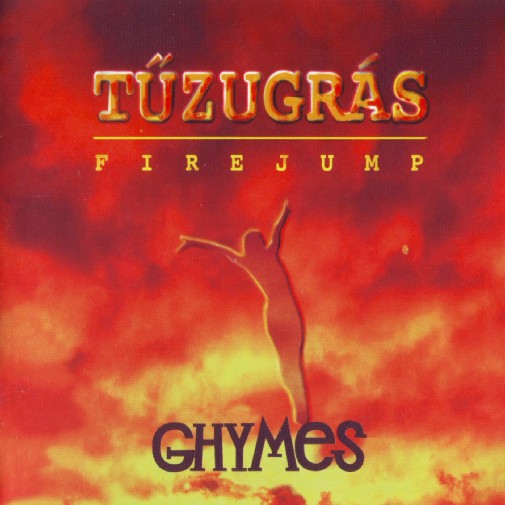
Ghymes – Tűzugrás [Hungria 1997]

Ao preparar o texto dessa postagem, surgiu nas pesquisas, com grande frequência, o termo “World Music”.
Afinal, o que é “World Music”? Segundo o criador do termo, o estadunidense Robert E. Brown, é a fusão das artes cênicas e musicais, visando promover a harmonia e o entendimento entre as culturas.
Desde a década de 1980 o termo vem sendo adulterado, para o uso da grande industria de entretenimento dos USA e UK. Assim ele passou a designar toda e qualquer forma de música que não fosse anglo-saxônica. Da música brasileira ao Raí, do folclore balcânico à salsa, dos ritmos africanos aos Banghra indianos, do flamenco ao tradicional japonês, etc..., tudo é “world music”. Parece, para os executivos da mídia dos USA e Inglaterra, que há dois mundos: o deles e o resto do mundo.

Toda essa apresentação é necessária, pois o GHYMES é enaltecido com um dos expoentes da “world music”. Eles são é muito bons no que fazem: música da Europa Central, com muitos elementos folclóricos, renascentistas e eruditos. Pouca concessão é feita ao “mainstream”. Rotula-los de “world music” é pensar pequeno!

O Ghymes existe há 25 anos. Foi criado por jovens húngaros que viviam na Eslováquia, de diversas formações musicais, que fundidas resultaram em um som único; o som do GHYMES.
A música do GHYMES está enraizada nas tradições folclóricas Húngaras e do Centro-Leste europeu. Sua “Ars Poética” é a universalidade da música. Através de sua música procuram semelhanças e não as diferenças entre as pessoas. Essas semelhanças foram sempre encontradas onde quer que eles apareceram no palco - as pessoas de diferentes culturas em diferentes partes do mundo os acolheram calorosamente (Japão, Iraque, Jordânia, Finlândia, USA, Canadá). Eles acreditam que a energia e a "mágica"da música ao vivo são a condição e a causa de seu sucesso.

O álbum aqui apresentado é de 1997 (concebido em 1996), ainda com a formação original do GHYMES. Nele, segundo Andor Buják, foram acrescentados mais instrumentos elétricos do que nos álbuns anteriores, porém sem alterar o som tradicional do grupo.
Mais informações em: GHYMES

MÚSICOS
Andor Buják - viola, flautas, clarineta, saxophone, baixo, voz
Krisztián Buják - bagpipe, clarineta, flauta, voz
Gyula Szarka - voz, baixo, guitarra
Tamás Szarka - voz, violino, guitar, drum, koboz
Guests:
László Hobó Földes - voz
László Béhr - cimbalom, voz
Péter Farnbauer - teclados
Bernadett Kiss - voz

MÚSICAS
01 – Királyének
02 - Kötve vannak szárnyaim
03 - Militaris congratulation
04 – Koldusok
05 - Ifjú szívekben élek
06 – Tűzugrás
07 - Szerelmes dal
08 – Majomország
09 - Pozsonyi blues
10 - Új esztendő


GHYMESHARE
GHYMESLOAD